
Giraffes and lumpy skin disease
You might remember that last year (+/- from mid-April until the end of May) we had a lot of giraffe mortalities in Namibia. Many farmers reported finding dead giraffes and several reported seeing sick giraffes that were behaving abnormally. Here is a quick summary of the symptoms that were observed:
Physical signs: Many farmers reported sick giraffes with drooping/hanging ears. A few observed excessive drooling, discharge from the eyes and some reported that the giraffes seemed blind. Several giraffes had skin lesions, which looked like lumpy skin disease.
Lethargy: Giraffes stand motionless in the bush, showing no response to approaching vehicles or people.
Ataxia: Giraffes appear to be ‘drunk’, stumbling over bushes and fences. Some indicate a staggered gait.
We compiled a video of several sick giraffes; if you would like to receive it per WhatsApp or email, please contact Wildlife Vets Namibia.


The mortalities were reported across central Namibia: west and north of Okahandja, extending to Omaruru and Waterberg. Additional reports came from farms southwest, south and east of Okaukuejo (Etosha NP), Outjo and towards Maroelaboom. Rumours also suggested giraffe mortalities inside Etosha National Park.
We unfortunately received too few samples and completed questionnaires to determine the exact cause of the giraffe mortalities. However, the clinical signs in many giraffes strongly point to lumpy skin disease (LSD). We ruled out several other possibilities:
Since the mortalities occurred over a very wide area with dramatically different vegetation types, plant poisoning seemed extremely unlikely.
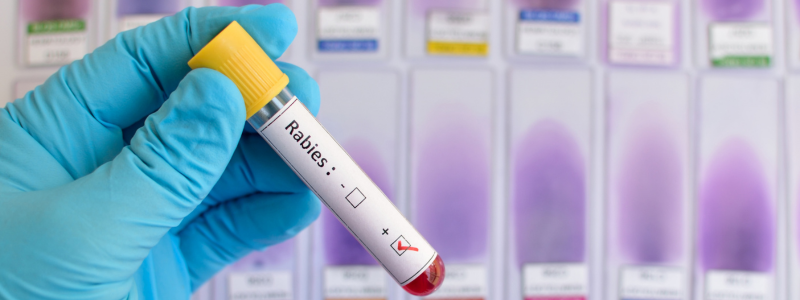
Some people suggested rabies, which we eliminated since multiple giraffes tested negative.
Others mentioned lightning strike, however, a lightning strike will kill instantly while many sick giraffes were seen outside periods of rain.
We therefore believe the mortalities were due to an outbreak of LSD. We experienced a very good rainy season which also resulted in abnormally high numbers of insects (esp. flies, midgets and mosquitos). Of the 14 questionnaires we received, 71.4% of the farmers observed an increased number of mosquitos/biting flies/midgets in the months April and May, compared with 2024. At the same time, several LSD outbreaks were recorded in cattle in northern Namibia. Importantly, the giraffe mortalities stopped with the onset of the first cold spells in winter, which coincided with a dramatic reduction in insect numbers. This further supports our opinion that an insect-borne disease such as LSD was the likely cause.
There have been a few reports of LSD in single giraffe, however, this is the first time that a large-scale outbreak of the disease, as seen in Namibia in 2025, has been reported. Other than the one giraffe in our study, we had multiple farmers report having seen sick or dead giraffes with typical LSD skin lesions. Sheep and goats, as well as other African wild ungulates, with the exception of impala and springbuck, seem to be resistant to the disease, however, quite a few ungulates on other continents can get the disease.
What is lumpy skin disease (LSD)?
LSD is a disease caused by a (capri)pox virus, and causes nodular (growth of abnormal tissue) skin lesions on the body. Humans cannot become infected with LSD. This disease is common all over Africa and is currently spreading into Europe, Russia, Middle East and Asia.
The disease is mostly spread via arthropods acting as mechanical vectors. These include biting flies (e.g. the stable fly Stomoxys calcitrans), mosquitoes and Culicoides midges. From experiments we know that certain species of hard ticks are also capable of transmitting the disease. Infection via contact (saliva, direct contact, contaminated food, calves drinking milk) is another potential route, but not yet fully understood.
How fast and how severe an outbreak becomes, depends on the number and activity of local insect vectors. Outbreaks often spike during warm, wet weather when these insects are more common. When new outbreaks appear far away, they are usually linked to the movement of infected animals rather than insects. The LSD virus may remain viable for up to a month in dried skin crusts and five months in semen.
What are the signs of LSD?
Animals infected with LSD first develop a fever, are lethargic and unwilling to eat, have excessive tearing and salivation, nasal discharge and swollen lymph nodes. This is followed by the formation of large, firm skin-nodules from 0.5 cm to 5 cm in diameter. They can be found all over the body, but particularly around the head, neck, udder, scrotum and perineum (the area between the anus and genitals).Sometimes there are only a few nodules, and other times there could be hundreds.. When the nodules ulcerate (break open) fluid will leak out.
Secondary infection can become a problem, the nodules can start forming pus and can become necrotic (cells dying off). In severely affected animals these lesions can spread to the respiratory and gastrointestinal tracts. Especially dairy cattle in peak production can become severely affected and will show a marked decrease in milk production.
LSD does not always show; up to 50% of cases in an outbreak are subclinical – meaning the animals do not show any signs. The mortality rate usually remains below 10%, but due to a reduced milk yield, loss of condition and a reduced value of the hide the economic losses can be severe.

Diagnosis
LSD is a notifiable disease, so if you detect any signs of LSD, you must notify your state veterinarian. The veterinarian can make a diagnosis by taking a skin sample. Pseudo-lumpy skin disease, which is caused by a herpesvirus, may show similar symptoms as LSD, and Dermatophilus congolensis also causes skin nodules, so it is important that the veterinarian checks and sends samples to the lab. PCR (Polymerase chain reaction) is a test that detects the genetic material of a virus and is often used to confirm the diagnosis and to differentiate between different strains of the virus.
Treatment and prevention
There is no treatment for LSD. Non-specific treatment with antibiotics, anti-inflammatory drugs and vitamins may be required to treat secondary bacterial infections and to bring the fever down.
Most important is to prevent LSD. Good summer rains with high insect loads should be an urgent warning sign of a possible LSD outbreak. Prevention in cattle is easily done by vaccinating cattle with the attenuated Neethling strain vaccine. This vaccine contains a weakened version of LSD. After injection, the body will produce antibodies, and will make the animal immune to LSD. All cattle from 6 months and older should be vaccinated annually, preferably before the rainy season. Consider culling severely affected animals within a herd to limit the spread of the disease in your herd.
Remember, the virus can survive for weeks in the skin of culled animals!
Another important aspect to prevent diseases transmitted by flies is to control the flies. Have fly traps around the kraal and dip/spray cattle with an insecticide.

Lumpy skin disease and wildlife?
There is very little data available on the role of wildlife in the spread of LSD. In general, the capripox-viruses are very host-specific, meaning that they live solely in one species of host. Natural infections were reported in Asian water buffalo in Egypt in 1988. Interestingly, these buffalo got less sick from it. Clinical signs of LSD in impala and giraffe have been demonstrated after they were injected with the LSD virus. In several other studies researchers checked for antibodies against the capripox-virus and found that blue and black wildebeest, springbuck, eland, impala, African buffalo (current research suggests that African buffalo are probably not, or only slightly susceptible), kudu, waterbuck, reedbuck and giraffe had some form of antibodies in their blood samples. This might mean that the animals were infected, but not necessarily transmitted the virus.
The actual number of wild ruminants that are/have been infected with
LSD might be higher than we think, as observing skin lesions in wildlife
is often difficult, and they likely are more prone to be caught by
predators – leading to a lack of reports of LSD in wildlife.
It is known that giraffes can get LSD. In 1970 a giraffe calf in South Africa was experimentally injected with the LSD virus, and died with typical symptoms and lesions of the disease. The LSD virus also has been isolated from a giraffe that died in a Vietnamese zoo. While giraffes are susceptible, mortality is not always guaranteed. It depends on the severity of infection, insect vector pressure and overall health of the animal.
We urge farmers to please contact us if you experience any mortalities and/or see sick giraffes on your farm. Like last year, we had a good rainy season, but fortunately we have not seen the same high insect numbers, and reports of LSD in cattle have been very low. With the cold spells already setting in, we are hopeful that we won’t experience the mortalities we saw last year.
Source: Wildlife Vets Namibia


Comments